Automotive · body-in-white welding
Multi-robot body-in-white welding: 120 spot welds programmed in one pass with a digital twin
A body-in-white welding line replaced on-site teaching with a digital twin: 120 spot welds programmed offline in one pass, teaching time cut from about 7 days to about 2, and about 80% less downtime on site.
The project
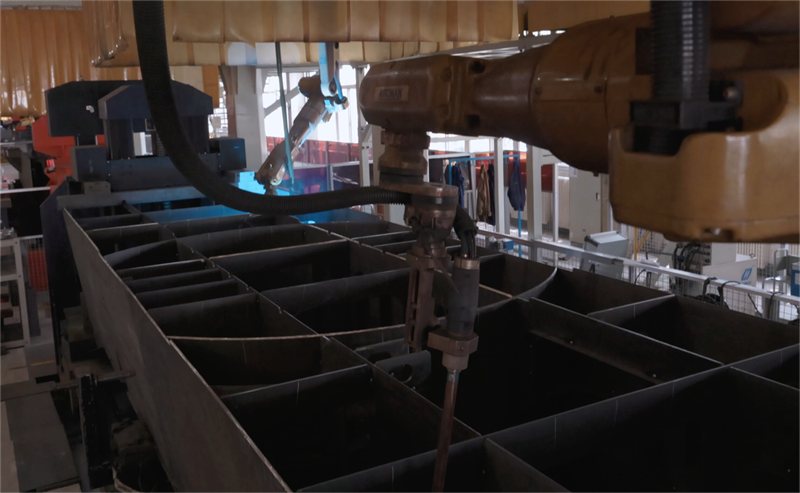
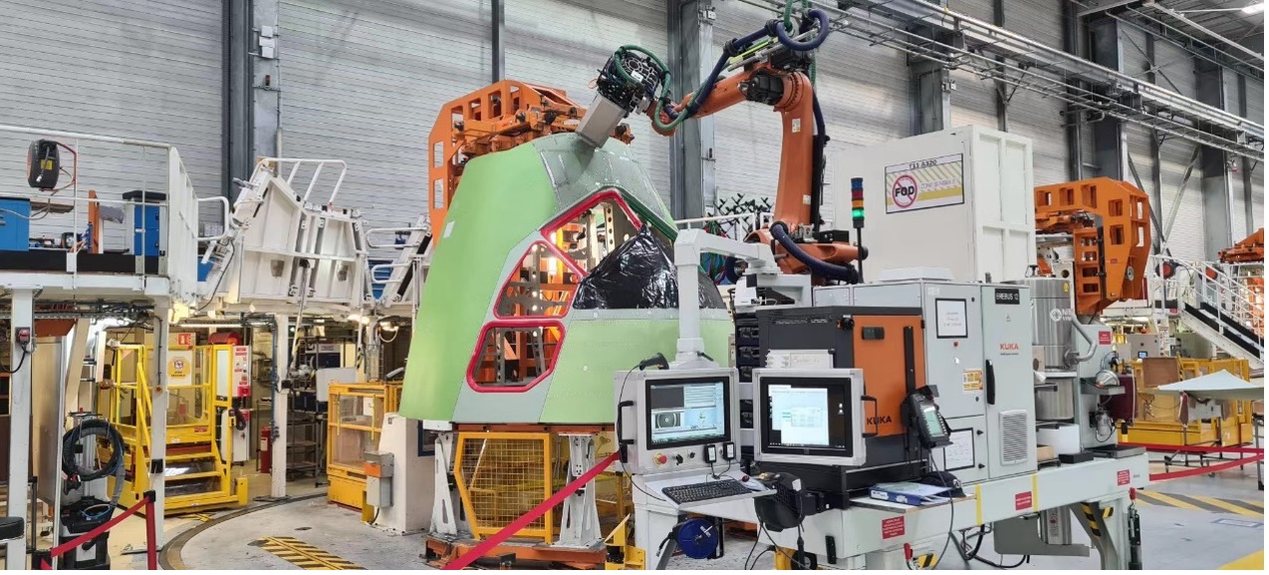
Central Tooling Design’s body-in-white welding line uses several industrial robots to spot-weld body structures automatically, with YASKAWA robots, weld guns, fixtures and the car body working together.
Faster model changes, more weld points and shorter delivery times mean process development that relies on teaching on site can no longer deliver efficiency, quality and flexible production at the same time. The project moved process development from on-site commissioning into the virtual environment.
Industry pain points
- Long teaching cycles on site: complex bodies need point-by-point teaching, and the robots tie up the line
- Expensive downtime: program changes and trial welds interrupt normal production
- Interference found late: collisions between guns, bodies, fixtures and robots often show up only on site
- Process experience hard to replicate: weld sequence, orientation and path planning depend on individuals
- Slow model changes: introducing a new model means repeating a lot of teaching and validation
The solution
In FASTSUITE Edition 2 a 3D digital-twin welding cell matching the shop floor was built, reproducing robots, weld guns, fixtures, conveyors, the body model and the coordinate systems.
- Digital model of the line: equipment layout, working ranges, positioning relationships and safety zones
- Offline spot-weld programming: weld positions, sequence, robot orientation, gun opening and closing, and motion paths
- Reach and interference checks: collisions, unreachable welds and orientation risks found in advance
- Cycle-time optimisation: fewer wasted moves through optimised paths and weld sequence
- Virtual validation and download: once validated, the programs are downloaded to the robots and calibrated in a closed loop with data from the shop floor
Results
- 120 spot welds programmed offline in one pass
- Teaching time cut from about 7 days to about 2, roughly four times faster
- About 80% less downtime on site and about 70% less total working time
- Deviation between the 3D model and the real equipment within ±1 mm; virtual and real paths essentially coincide
- Programs run directly once validated virtually
The value
Body-in-white spot welding moves from “teach on site, try on site, fix on site” to “model-driven, programmed offline, validated virtually, launched quickly”.
For the line that means shorter new-model introductions, lower robot commissioning downtime, a higher first-time-right rate for programs, less dependence on individual experience, and a digital welding engineering process that can be repeated and traced.
Suggested acceptance indicators: offline programming coverage, first-pass weld rate, downtime hours on site, robot cycle time, path deviation, program reuse rate and new-model introduction time.
The figures come from the project video and solution document; for formal acceptance we recommend checking them against on-site cycle times, downtime records, weld quality and coordinate measurements.