Automotive · automated painting
Automotive painting: paths that follow the curve, and film-thickness analysis
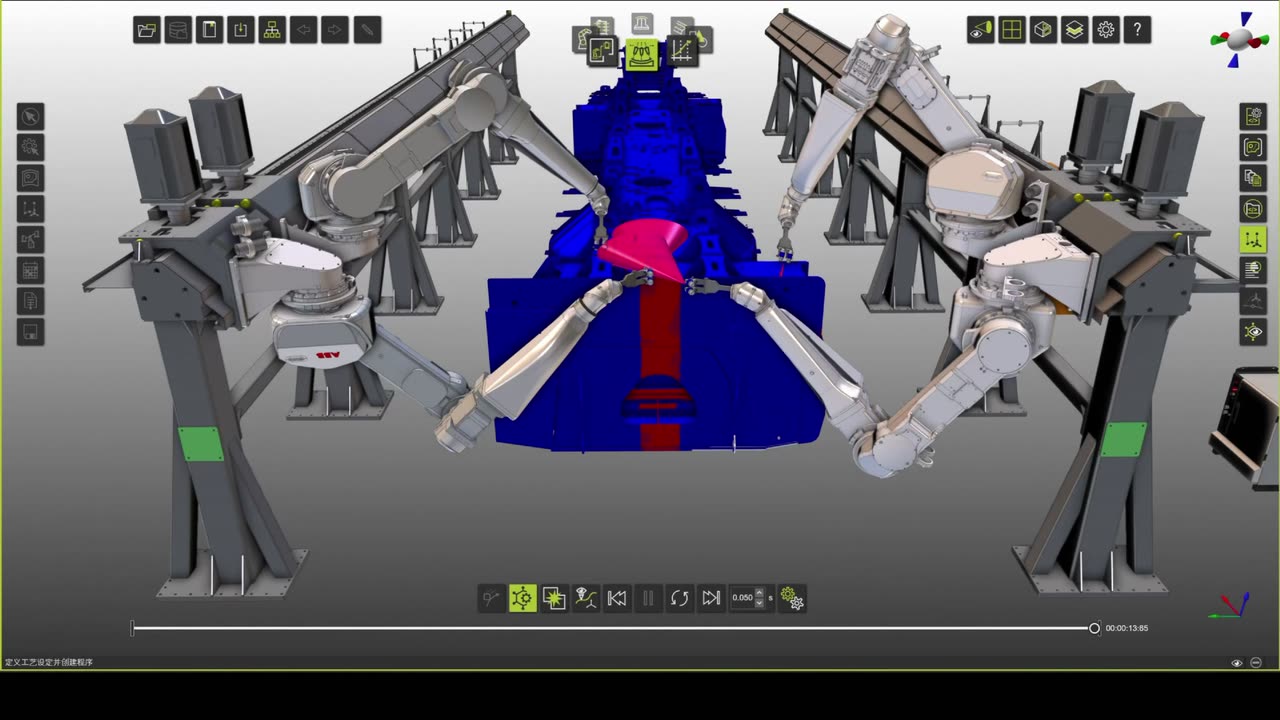
Several painting robots working together, with offline-programmed paths that follow the part surface and Gaussian film-thickness analysis that cuts commissioning losses: 50% more efficient multi-robot painting, 15% better coverage and 50% fewer trial runs.
The painting challenge
Painting is hazardous work; robots protect workers and raise efficiency.
But on complex curved surfaces, planning robot paths by manual teaching is slow and stretches downtime on site. Keeping paint paths close to the surface while controlling film thickness is the focus of process planning and commissioning.
The FASTSUITE approach
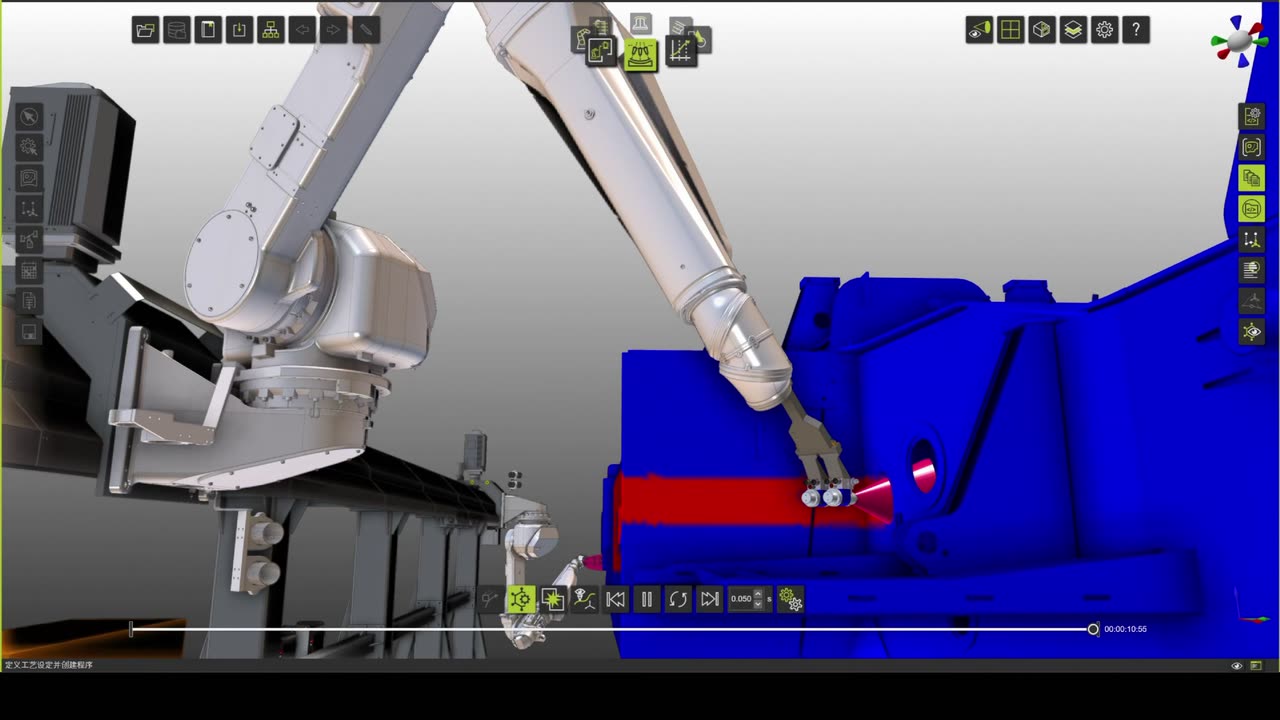
- A high-precision mathematical model of the surface: offline-programmed paths follow the curvature of the part closely
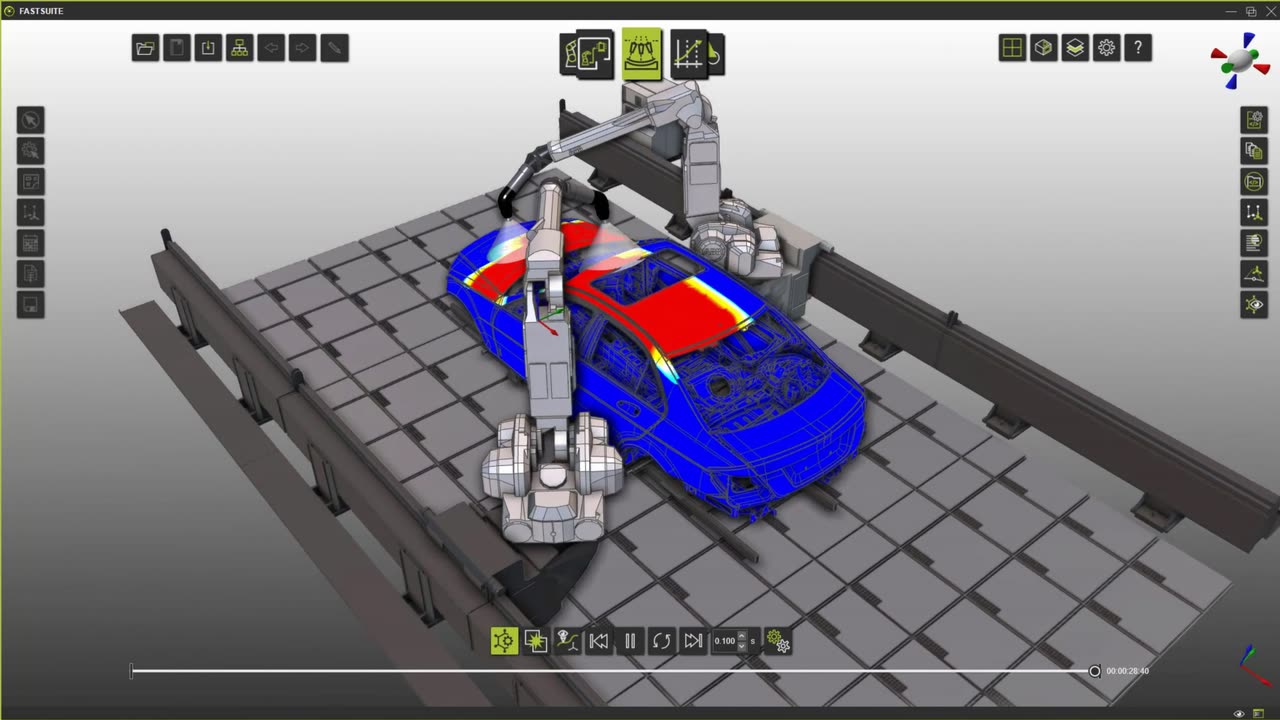
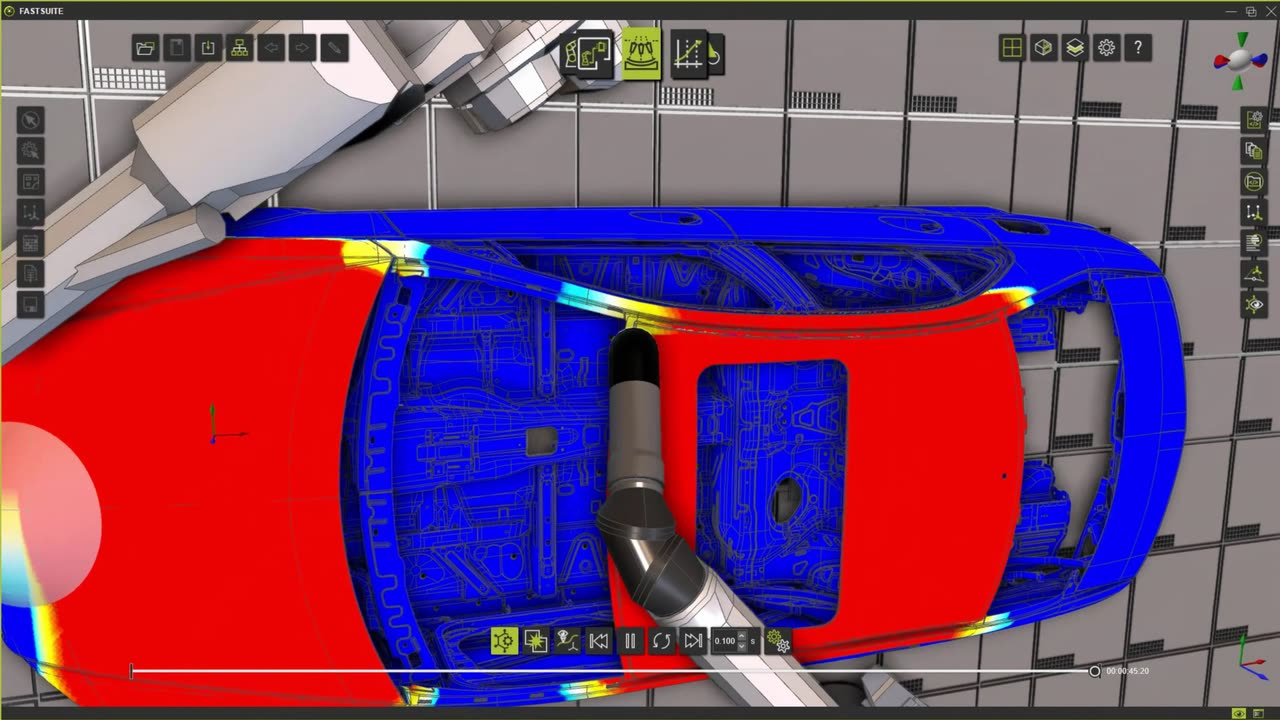
- Gaussian film-thickness analysis: less waste from commissioning, lower cost, higher efficiency
- Tailored strategies: path spacing, path planning, overshoot and other parameters, adjusted in one click as needed
Results
- Multi-robot painting 50% more efficient
- Paint coverage up 15%
- 50% fewer trial runs
The video and images show multi-robot work in the paint shop, a 3D painting cell, spray guns following the part surface, full-body paint path simulation, a top view of film thickness on the body and a local film-thickness analysis.
The percentages in the results are figures supplied by the customer.
Project images